Why do people lie? It's more complicated than you think.
Many of the biggest frauds in history started out with a lie, and grew over time. We have a perception of the perpetrators as greedy, selfish people without a conscience, but often there are other factors at play.
Perhaps, most surprisingly, is the willing help the fraudsters get along the way.
NPR's recent story on The Psychology of Fraud: Why Good People Do Bad Things provides a fascinating insight into how these frauds occur.
Check out the NPR link here.
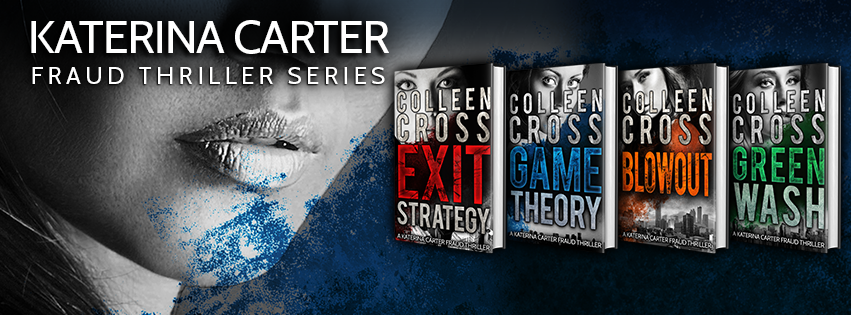
Colleen Cross, Author
Author of the Katerina Carter Fraud Thriller Series
Saturday, May 26, 2012
Wednesday, May 23, 2012
Amazon Top 100 Reviews - 5 Star Thriller
I'm thrilled to say that
Exit Strategy is in Amazon's Police Procedurals top 100, based on customer reviews!
Top 100!! And it's been there for a few weeks now.
I'm happy, can you tell? Writing a novel is a long and solitary journey full of surprises, setbacks, and self-doubt. Reader reviews and feedback are the best possible rewards.
As I'm writing, I always wonder whether you as a reader will like what you see on the printed page, or e-page for that matter. Will you identify with Kat, Jace and the rest of the Exit Strategy gang? Is there enough suspense to keep the pages turning? Just so you know, my secret goal is to keep you up way past your bedtime! Moo ha ha!
Okay, not so secret now.
Seriously though, these my thoughts as I write. After all, novels are entertainment. If you're investing a dozen or more hours of your life to read my book, I want to ensure you have a great reading experience.
I write what I know best, the best way I know how. And hope that will transport you to another world, away from your to-do lists, worries and tedium of everyday life.
Thanks for reading!
Top 100!! And it's been there for a few weeks now.
I'm happy, can you tell? Writing a novel is a long and solitary journey full of surprises, setbacks, and self-doubt. Reader reviews and feedback are the best possible rewards.
As I'm writing, I always wonder whether you as a reader will like what you see on the printed page, or e-page for that matter. Will you identify with Kat, Jace and the rest of the Exit Strategy gang? Is there enough suspense to keep the pages turning? Just so you know, my secret goal is to keep you up way past your bedtime! Moo ha ha!
Okay, not so secret now.
Seriously though, these my thoughts as I write. After all, novels are entertainment. If you're investing a dozen or more hours of your life to read my book, I want to ensure you have a great reading experience.
I write what I know best, the best way I know how. And hope that will transport you to another world, away from your to-do lists, worries and tedium of everyday life.
Thanks for reading!
Labels:
colleen cross,
finance,
Fraud,
greed,
kindle read,
thriller
| Reactions: |
Friday, May 18, 2012
CrimeWriter Spotlight: Debra Purdy Kong
I'm very pleased to host Debra Purdy Kong for this month's Crime Writer Spotlight. In addition to Debra's impressive publication list, she also manages to find time to serve as Regional Vice-President for the Crime Writers of Canada. Here she is, with an interesting perspective on fraud and its impact on all of us.
The Truth About Fraud
Not that many years ago, fraud was thought of as a fairly benign, even victimless crime. After all, there was no bloodshed or violence involved. Numbers would be merely altered, for example, to make a company appear more profitable than it was. Money would be laundered by organized crime, Ponzi schemes would be hatched, or government agencies cheated from taxes owed. People lost money in varying quantities, and those caught usually received light sentences in a minimum security prisons. With technological advances, however, not to mention increased greed and desperation, fraud is far more prevalent and dangerous.
Consider this: in 2011, more than 11.6 million American adults were affected by identity theft, a 13% increase from the previous year. Between 2005 and 2009, 500 million people had their personal data exposed through corporate data breaches. Recent studies indicate that one identity is stolen every three seconds.
You might say, so what? It’s just money, and isn’t that money returned to accounts through insurance and so forth? Well, not always. When one’s identity is stolen it costs the victim, on average, $1,600 to reclaim their identity and about 165 hours of work, which means a lot of phone calls to cancel credit cards, notify banks, creditors, the police, credit reporting companies, and so forth.
Here’s the thing. Fraud might not involve shootouts and explosions, but it does destroy businesses, corporations, and lives. Too many crooks in positions of trust and authority can hurt entire economies. Would the U.S. economy have melted down in recent years if everyone (including other governments) were managing finances honestly and responsibly? How many people were thrown out of work? How many lost their homes? How many families have fallen apart due to stress from financial woes? How many people have committed suicide after having been victimized by white-collar crime? The answer is more than you want to know.
What about the bigger picture? What about technology with the capability to shut down a city’s entire infrastructure? Can you imagine every ATM machine, traffic light and computer-operated system, including air traffic control towers and hospitals, shutting down? Experts say it’s possible, often with the caveat that it’s highly unlikely. Is it?
The truth is that fraud never was a benign, victimless crime. It has, however, evolved into a complex, technological beast with the potential for global destruction. The many facets of fraud are partly what attracted me to writing about it over 25 years ago.
In those days, I was a secretary at a firm of chartered accountants. One day, an articling student said, “How come no one ever writes about us”? Thus Alex Bellamy was born and after concocting a plot about fraud, Revenue Canada, and murder (somehow not that difficult), Taxed to Death, was published. The sequel, Fatal Encryption, is about a department store chain that’s been hacked by someone who threatens to destroy all data unless he receives a large amount of money. In my books, a little romance and humor soften the reality, and the bad guys always get theirs in the end.
Although born in Toronto, Debra has spent most of her life in BC. After earning a Diploma in Criminology from Douglas College, she worked as a secretary before leaving day jobs to raise her children. In addition to publishing Taxed to Death, and Fatal Encryption, she’s also published more than one hundred short stories, essays, and articles for publications including Chicken Soup for the Bride’s Soul, B.C. Parent Magazine, and The Vancouver Sun. Employment in the security field as a patrol and communications officer proved to be useful research for her Casey Holland mysteries. The first novel in this series is The Opposite of Dark. The sequel, Deadly Accusations, was released by TouchWood Editions in March.
Her short stories have won first place awards in competitions sponsored by NeWest Review, and other publications. She’s also won honorable and finalist mentions for her short fiction at the Surrey International Writers’ Conference.
More information about Debra and her work can be found at www.debrapurdykong.com, or on her blog at http://writetype.blogspot.com She also writes a weekly blog about white-collar crime issues on AuthorsDen at http://tinyurl.com/dbe5rp
The Truth About Fraud
Not that many years ago, fraud was thought of as a fairly benign, even victimless crime. After all, there was no bloodshed or violence involved. Numbers would be merely altered, for example, to make a company appear more profitable than it was. Money would be laundered by organized crime, Ponzi schemes would be hatched, or government agencies cheated from taxes owed. People lost money in varying quantities, and those caught usually received light sentences in a minimum security prisons. With technological advances, however, not to mention increased greed and desperation, fraud is far more prevalent and dangerous.
Consider this: in 2011, more than 11.6 million American adults were affected by identity theft, a 13% increase from the previous year. Between 2005 and 2009, 500 million people had their personal data exposed through corporate data breaches. Recent studies indicate that one identity is stolen every three seconds.
You might say, so what? It’s just money, and isn’t that money returned to accounts through insurance and so forth? Well, not always. When one’s identity is stolen it costs the victim, on average, $1,600 to reclaim their identity and about 165 hours of work, which means a lot of phone calls to cancel credit cards, notify banks, creditors, the police, credit reporting companies, and so forth.
Here’s the thing. Fraud might not involve shootouts and explosions, but it does destroy businesses, corporations, and lives. Too many crooks in positions of trust and authority can hurt entire economies. Would the U.S. economy have melted down in recent years if everyone (including other governments) were managing finances honestly and responsibly? How many people were thrown out of work? How many lost their homes? How many families have fallen apart due to stress from financial woes? How many people have committed suicide after having been victimized by white-collar crime? The answer is more than you want to know.
What about the bigger picture? What about technology with the capability to shut down a city’s entire infrastructure? Can you imagine every ATM machine, traffic light and computer-operated system, including air traffic control towers and hospitals, shutting down? Experts say it’s possible, often with the caveat that it’s highly unlikely. Is it?
The truth is that fraud never was a benign, victimless crime. It has, however, evolved into a complex, technological beast with the potential for global destruction. The many facets of fraud are partly what attracted me to writing about it over 25 years ago.
In those days, I was a secretary at a firm of chartered accountants. One day, an articling student said, “How come no one ever writes about us”? Thus Alex Bellamy was born and after concocting a plot about fraud, Revenue Canada, and murder (somehow not that difficult), Taxed to Death, was published. The sequel, Fatal Encryption, is about a department store chain that’s been hacked by someone who threatens to destroy all data unless he receives a large amount of money. In my books, a little romance and humor soften the reality, and the bad guys always get theirs in the end.
Although born in Toronto, Debra has spent most of her life in BC. After earning a Diploma in Criminology from Douglas College, she worked as a secretary before leaving day jobs to raise her children. In addition to publishing Taxed to Death, and Fatal Encryption, she’s also published more than one hundred short stories, essays, and articles for publications including Chicken Soup for the Bride’s Soul, B.C. Parent Magazine, and The Vancouver Sun. Employment in the security field as a patrol and communications officer proved to be useful research for her Casey Holland mysteries. The first novel in this series is The Opposite of Dark. The sequel, Deadly Accusations, was released by TouchWood Editions in March.
Her short stories have won first place awards in competitions sponsored by NeWest Review, and other publications. She’s also won honorable and finalist mentions for her short fiction at the Surrey International Writers’ Conference.
More information about Debra and her work can be found at www.debrapurdykong.com, or on her blog at http://writetype.blogspot.com She also writes a weekly blog about white-collar crime issues on AuthorsDen at http://tinyurl.com/dbe5rp
Labels:
#amwriting,
#kindle,
Crime writer,
Fraud
| Reactions: |
Subscribe to:
Posts (Atom)


